
Top 10 RevenueCat Alternatives for Mobile Apps in 2026
Looking for a RevenueCat alternative? Explore our 2026 guide to 10 top platforms with feature comparisons, pricing, and migration tips for technical teams.
Your subscription stack works. Purchases validate, entitlements resolve, restores mostly behave. But every meaningful change around that core flow still turns into a release cycle. You want to test a different onboarding path for trial users, swap a paywall, ask a churn-risk survey, or suppress upgrade prompts for active subscribers, and suddenly engineering is back in the critical path.
That's why teams start looking for a RevenueCat alternative. The trigger isn't always that RevenueCat failed. More often, the problem is scope. RevenueCat is strongest as subscription infrastructure, while product and growth teams increasingly need a system that connects billing state to the full in-app journey. Independent comparison coverage also shows that this market has matured beyond simple receipt validation, with buyers comparing analytics depth, experimentation, paywall control, and broader growth workflows across vendors like Adapty, Qonversion, Chargebee, Recurly, and others, as noted in this RevenueCat alternatives market overview.
Pricing pressure is part of the story too. RevenueCat's Pro plan has been reported as free up to $2,500 in monthly tracked revenue, then charged at 1% of monthly tracked revenue thereafter, which is one reason teams begin modeling alternatives once subscription revenue becomes a visible operating cost, as described in this comparison of RevenueCat competitors and alternatives.
If you're evaluating options now, the question usually isn't “what can replace receipt handling?” It's “what helps us ship and optimize monetization flows without another engineering sprint?”
1. Nuxie

Nuxie takes a different angle from classic subscription tooling. Instead of treating billing as the center of the product, it treats billing and entitlements as inputs into the in-app experience layer. That matters when your monetization work spans onboarding, surveys, paywalls, retention offers, feature education, and liveops moments, not just purchase validation.
For mobile teams shipping across iOS, Android, React Native, Flutter, Unity, and Unreal, that's a practical advantage. The same system can decide who sees what based on entitlement state, then publish those changes remotely without waiting on app review.
Where Nuxie stands out
The strongest use case is entitlement-aware flow publishing. Active subscribers can skip upsell prompts. Trial users can get lifecycle-specific onboarding. Lapsed users can drop into win-back branches. You're not stitching together analytics in one tool, paywalls in another, and remote UI logic somewhere else.
Nuxie is also provider-agnostic. Teams can use it with an existing billing stack or let it handle billing, subscription sync, purchase data, and entitlements directly. That reduces migration risk because you don't have to rip out everything on day one.
Practical rule: If your team says “we need to test a billing-driven journey,” but the work immediately expands into app changes, event wiring, and release coordination, you're not shopping for subscription infrastructure alone. You're shopping for a growth runtime.
Another practical difference is pricing model philosophy. Nuxie doesn't charge a revenue-share fee for billing and entitlement data. That's often attractive for teams that are moving away from percentage-based tooling and want predictable cost structure as monetization scales.
What implementation looks like
The developer experience is aimed at fast rollout. A one-call SDK can trigger screens, while the runtime is designed for cached, offline-ready delivery and on-device targeting. Rich UI matters here too. If your growth team wants animated onboarding, game offer surfaces, or visually branded paywalls, the platform supports Rive-rendered interfaces instead of forcing everything into a narrow template model.
A practical pilot usually looks like this:
- Start with one journey: Remote-launch a paywall, onboarding branch, or churn-save flow instead of migrating your whole monetization stack at once.
- Keep your entitlement source stable: Use Nuxie alongside your current provider first, then decide whether to consolidate later.
- Measure the right things: Watch entitlement accuracy, restore success, trial starts, purchase conversion, revenue per exposed user, and how much release work disappears.
- Pressure-test iteration speed: Have PM or growth ship copy, layout, and targeting changes without app-store submissions.
If paywalls are the immediate use case, Nuxie's approach to mobile paywall A/B testing gives a good sense of how the platform thinks about experimentation inside a broader in-app journey.
The trade-off is straightforward. Nuxie's public materials show docs, SDK examples, GitHub, and community entry points, but they don't show the kind of public enterprise compliance detail or customer proof some larger buyers will want. If you're a bigger organization, run a short pilot and ask security questions early.
Website: Nuxie
2. Qonversion
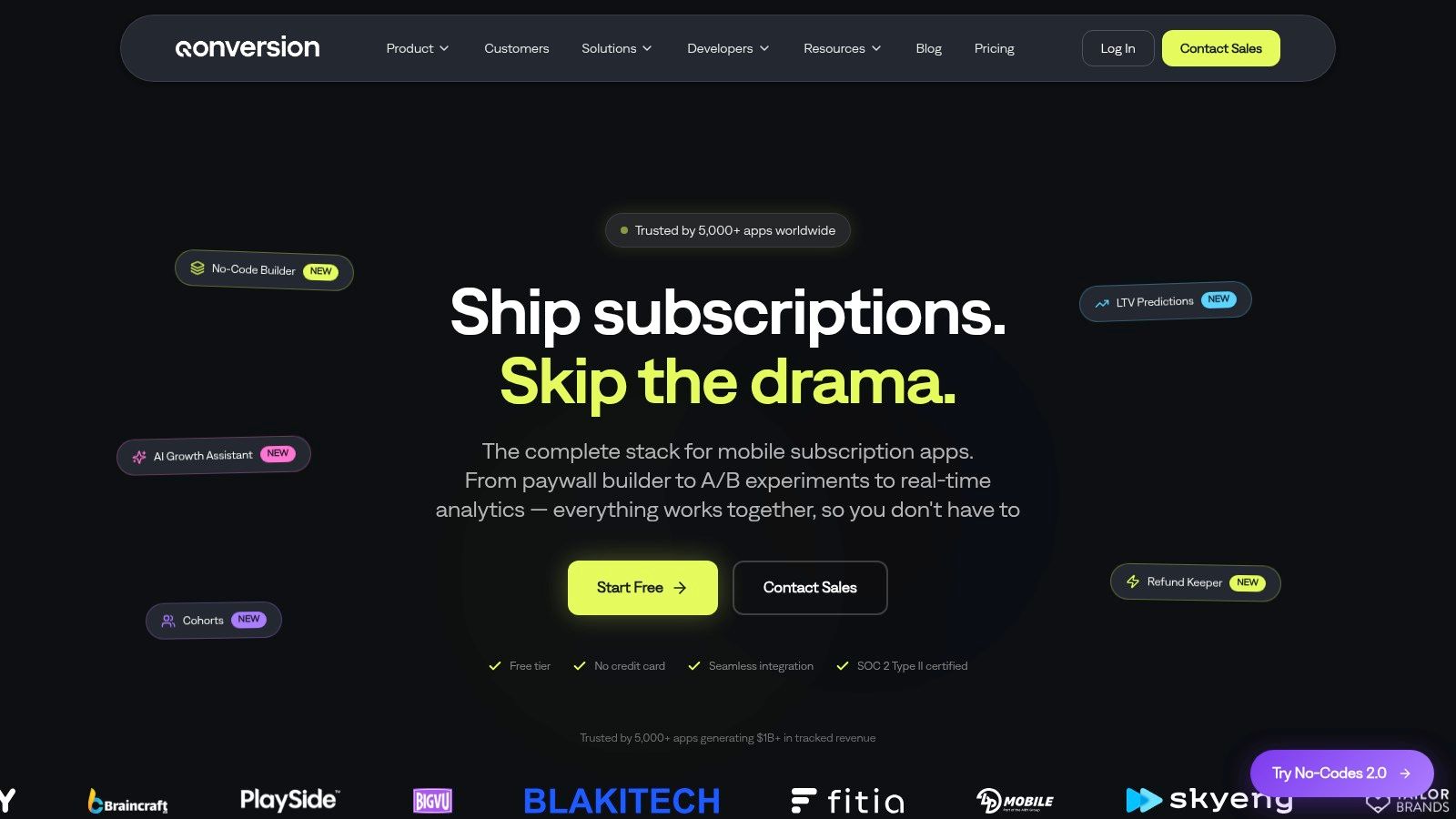
Qonversion sits in the sweet spot between subscription plumbing and growth tooling. It's a sensible RevenueCat alternative if you want stronger experimentation and analytics without moving all the way into a broader in-app experience platform.
Its biggest practical advantage is coverage. If your stack spans native mobile plus React Native, Flutter, Unity, Capacitor, or Cordova, broad SDK support reduces rollout friction and avoids framework-specific workarounds later.
Best fit
G2's competitor data suggests that Qonversion is one of the strongest RevenueCat alternatives in 2026, and G2 describes it as a mobile subscription SaaS that integrates with app stores and ad platforms to improve LTV measurement and feed high-value user data back into ad accounts in this G2 alternatives view for RevenueCat.
That makes Qonversion attractive for growth teams that care about more than entitlement state. If your UA team wants subscription data flowing back into ad systems and your product team wants paywall tests without waiting on releases, Qonversion fits that workflow better than a pure receipt layer.
What usually works well:
- Dynamic offer control: Real-time product variables help teams localize pricing, trials, and offer presentation without rebuilding screens.
- Paywall iteration: Built-in A/B testing is useful when PMs and growth own monetization experiments.
- Data connectivity: Integrations with analytics and collaboration tools help move subscription events into the rest of your stack.
What doesn't always work as well is cost predictability. Qonversion is still positioned around tracked-revenue-based pricing, so finance and product should model that early if growth is accelerating. It can look simple at the beginning and less simple later.
Qonversion is usually strongest when a team wants a mobile-first monetization stack with enough analytics to influence acquisition and lifecycle strategy, but doesn't need a full remote journey builder.
Website: Qonversion
3. Adapty
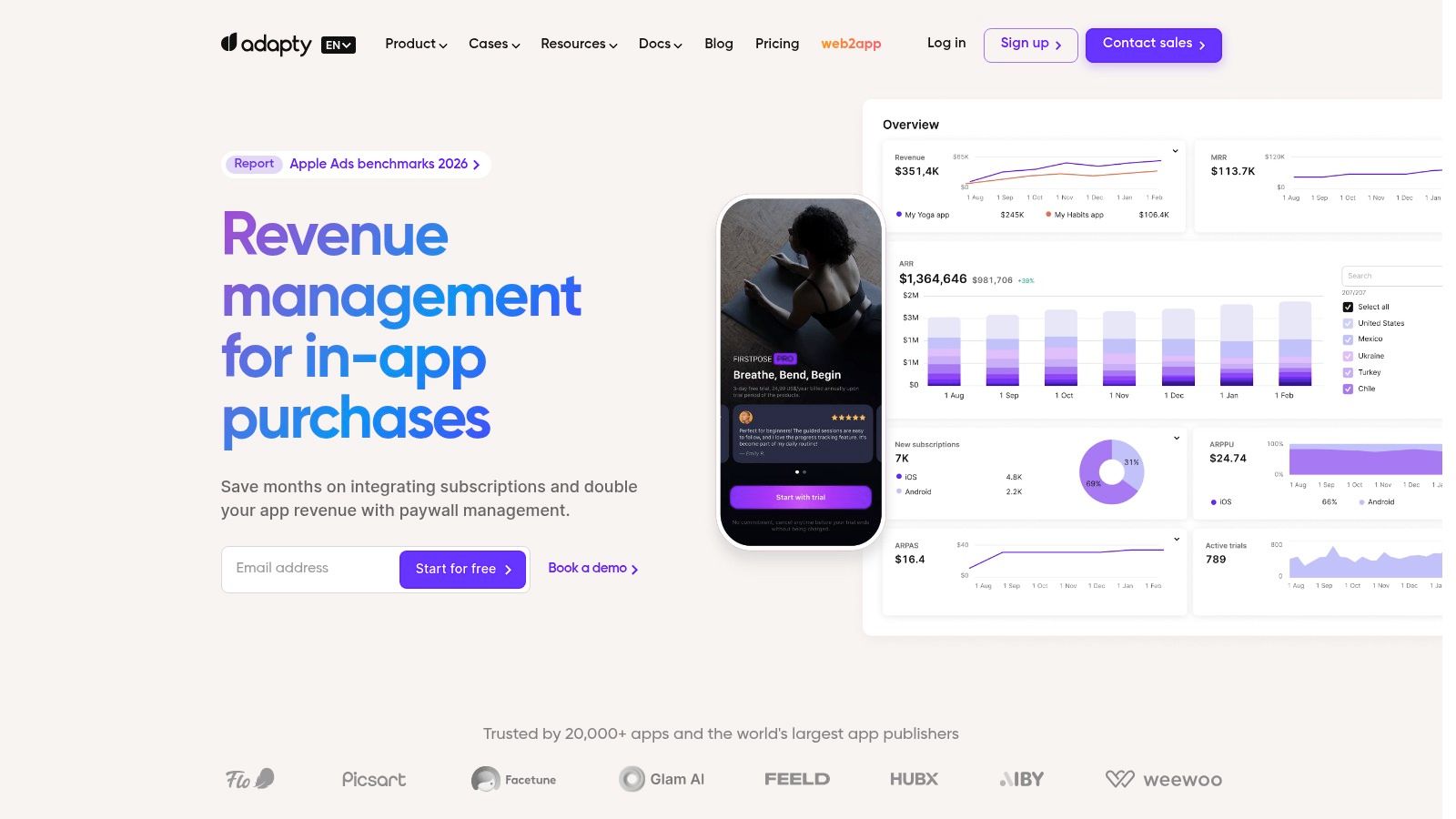
A common subscription team problem looks like this: billing is stable, but every meaningful paywall test still depends on mobile releases, developer bandwidth, and a queue of small requests nobody wants to keep reprioritizing. Adapty is one of the cleaner answers to that problem.
It is a better fit for teams that want subscription infrastructure tied closely to monetization execution. The value is not just receipt handling or entitlement state. The value is giving growth and product teams more control over what users see, when they see it, and how those changes affect conversion and retention.
Where Adapty stands out
Adapty's own product pages describe a stack built around paywall creation, remote configuration, subscription analytics, segmentation, and integrations with analytics tools and attribution platforms on its website. That combination matters because it shifts Adapty out of the narrow “billing backend” bucket.
For teams trying to connect subscription data to the in-app experience, that changes the day-to-day workflow. A user's purchase history, trial status, platform, or acquisition source can influence which paywall or offer appears, without turning every test into an engineering sprint.
A few cases where it tends to work well:
- PM and growth teams own experimentation: Teams can adjust paywalls, offers, and targeting faster, with less dependence on app release cycles.
- Subscription data needs to drive UX decisions: Segments based on billing state are more useful when they feed paywall logic, not just reporting.
- International monetization is a real priority: Localized pricing and market-specific offer control are easier to manage from one system.
Trade-offs in real use
Adapty is strongest around subscription monetization, especially paywalls and analytics. That focus is useful if the main job is increasing conversion on paid plans. It is less useful if the broader requirement is to run onboarding flows, in-app education, surveys, and retention messaging from the same place. In that setup, Adapty usually becomes one part of the stack rather than the operating layer for the whole customer journey.
Teams should also review packaging carefully. Some capabilities that matter to mature growth teams sit outside the most basic setup, so it is worth confirming which features are included before treating it as an all-in-one answer.
Website: Adapty
4. Apphud
A common point comes right after a subscription app starts getting real traction. The team wants better answers than "trial started" and "purchase completed," and they want to test pricing, paywalls, and recovery flows without turning every change into an app release. Apphud is a practical fit for that stage.
It is aimed at teams that want more operating control around monetization, but do not want the process and cost that often come with larger enterprise stacks. In Apphud's published RevenueCat comparison data, the company highlights support for 30+ tracked events versus RevenueCat's 12, along with real-time analytics, server-side receipt validation, and pricing A/B testing. Whether every team needs that level of event detail is a key consideration. If your growth decisions depend on billing state changes, trial behavior, cancellation signals, and recovery timing, the extra visibility matters.
That is also the lens I would use to judge Apphud. The core value is not just subscription infrastructure. It is whether billing data can drive more of the in-app experience and lifecycle work without a constant queue for engineering. Teams working on pricing tests, paywall iteration, and churn recovery usually get more from Apphud than teams that only need a stable purchase backend. If you are still sorting out your broader monetization model, this guide on how to monetize mobile apps is a useful companion.
Where Apphud stands out
Apphud is strongest when one platform needs to cover analytics, paywall operations, and retention workflows in a way a small product team can run.
A few areas stand out:
- Monetization analytics with more nuance: The event model is built for teams that want to inspect subscription behavior in more detail than basic conversion reporting.
- Remote control over monetization flows: Product settings and offers can be adjusted without waiting on a fresh build for every change.
- Recovery and win-back tooling: Built-in recovery features are useful for teams trying to keep churn interventions close to the billing system instead of stitching together separate tools.
- Paywall production workflow: Figma-to-paywall support helps when design and growth teams iterate often and want less developer involvement in presentation changes.
The trade-off is straightforward. Apphud is more compelling if the team will actively use its experimentation and analytics layer. If the primary requirement is broader journey orchestration, such as onboarding, in-app education, surveys, and retention messaging from one operating layer, Apphud still leaves gaps. In that setup, it improves subscription monetization, but it does not cover the full growth stack on its own.
Pricing also deserves a careful review. Some features that make Apphud attractive in practice are tier-dependent, so it is smart to map must-have workflows before committing.
Website: Apphud
5. IAPHUB
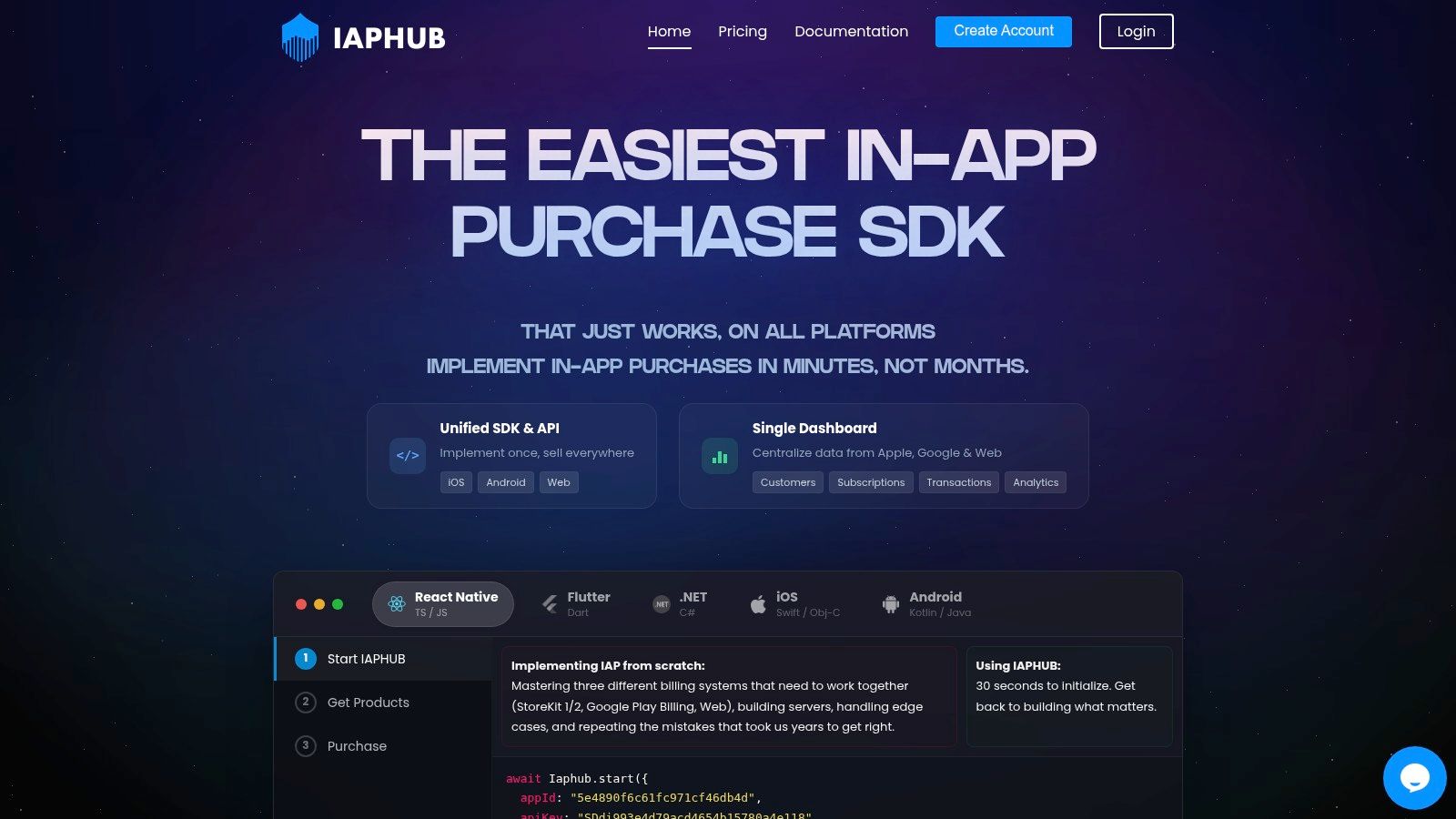
IAPHUB gets overlooked in flashy comparisons, but it solves a real architectural problem many teams hit after mobile traction starts to spread onto the web. If you sell subscriptions or premium access in both places, entitlement parity becomes more important than feature breadth.
That's where IAPHUB tends to make sense. It offers a lighter-weight developer path than some bigger platforms, and the hosted web checkout plus customer portal angle is useful for teams that don't want to assemble web billing from scratch.
Hybrid billing fit
One of the most underserved questions in this category is whether a RevenueCat alternative fits hybrid mobile plus web billing. Most comparison content stays mobile-first, while broader billing tools like Chargebee and Stripe Billing usually belong on the web side of a hybrid architecture rather than replacing mobile IAP infrastructure outright, as discussed in this 2026 RevenueCat alternatives comparison.
IAPHUB is interesting because it tries to bridge that gap with entitlement sync between web and mobile in a single setup. If your business sells through app stores and also wants direct web subscriptions, that's often easier to operationalize than bolting together separate systems later.
Migration note: Teams expanding from app-store-only monetization should decide early whether web purchases will become first-class entitlements. If the answer is yes, test restore logic and entitlement reconciliation before you worry about paywall cosmetics.
This becomes especially relevant when you're planning broader monetization strategy. If your roadmap includes subscriptions, one-time purchases, bundles, or mixed access models, mobile app monetization planning should include architecture, not just pricing experiments.
The trade-off is that advanced capabilities live higher up the stack, and the platform can become less cost-predictable if you scale into percentage-based pricing.
Website: IAPHUB
6. Purchasely
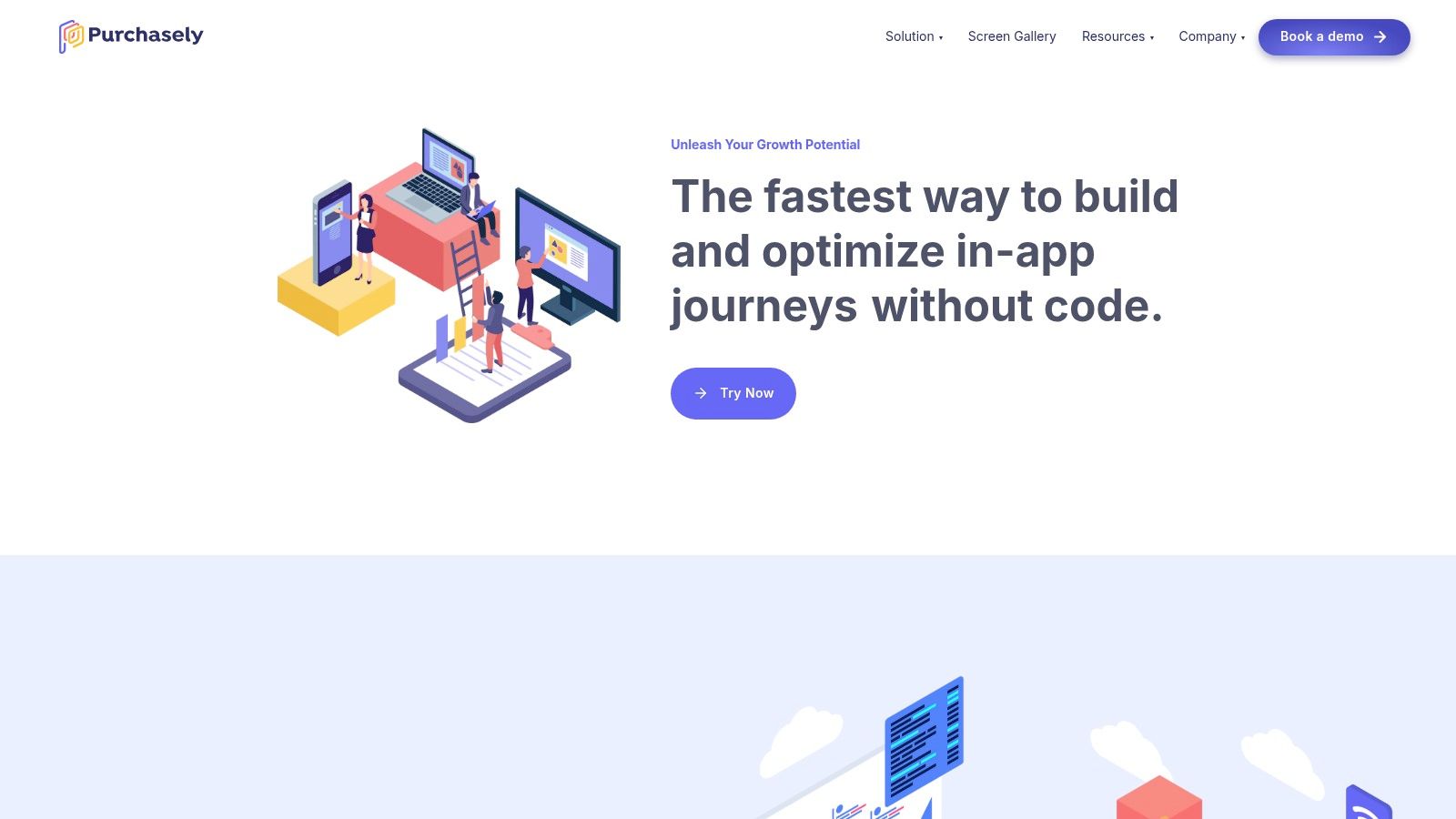
Purchasely is what I reach for conceptually when the product team says, “we want ownership over in-app screens, offers, and tests,” and engineering says, “fine, but not through weekly custom builds.” It's much more screen-centric than classic subscription infrastructure.
That makes it a strong RevenueCat alternative for teams that think in terms of offer surfaces rather than subscription records. If your monetization roadmap includes frequent copy changes, pricing presentation tests, alternate layouts, or store-specific merchandising, Purchasely maps well to that workflow.
Who gets the most value
Purchasely tends to fit organizations where non-developers actively own the monetization surface. The no-code composer and A/B testing model supports that operating style well, especially when product marketing wants to run experiments across different stores.
Good use cases include:
- Multi-store apps: Support across App Store, Google Play, Huawei, and Amazon helps if your distribution isn't limited to the default duopoly.
- Offer-heavy businesses: If you frequently test pricing presentation, intro offers, or audience-specific messaging, the tooling is aligned.
- Teams with strong product ops: Someone needs to actively manage experiments and tagging. Purchasely pays off more when that role exists.
The trade-off is buying process and likely complexity. Public pricing isn't the draw here. Purchasely is better thought of as an enterprise-oriented platform for in-app merchandising control. If you're a smaller app and just need reliable subscription state plus a few tests, it may be more system than you need.
Website: Purchasely
7. Glassfy

Glassfy is the developer-friendly option for teams that care about control and want to avoid feeling trapped inside a closed subscription platform. The open-source client library approach matters more than it sounds. It changes the exit risk conversation.
If your engineering team is already sensitive to SDK lock-in, Glassfy is worth a serious look. That's especially true for apps that want both app-store subscriptions and web billing through providers like Stripe or Paddle.
Why developers like it
Glassfy's appeal is architectural, not just feature-based. Open client libraries make it easier to understand what the SDK is doing and reduce the fear that core monetization behavior becomes a black box.
What stands out in practice:
- Cross-channel billing: Apple, Google, Stripe, and Paddle support is useful when web revenue is part of the plan.
- Real-time events: Teams can pipe monetization events into their own analytics systems instead of relying entirely on vendor dashboards.
- Lower perceived lock-in: Open libraries create more confidence during vendor evaluation.
Open SDK strategy doesn't remove migration work, but it does make teams less nervous about putting critical entitlement logic behind a proprietary wall.
The obvious downside is commercial clarity. Public pricing isn't front and center, so you'll likely need a conversation to understand fit and terms. For some teams that's fine. For others, especially smaller studios that want self-serve evaluation, it slows procurement.
Website: Glassfy
8. Nami ML
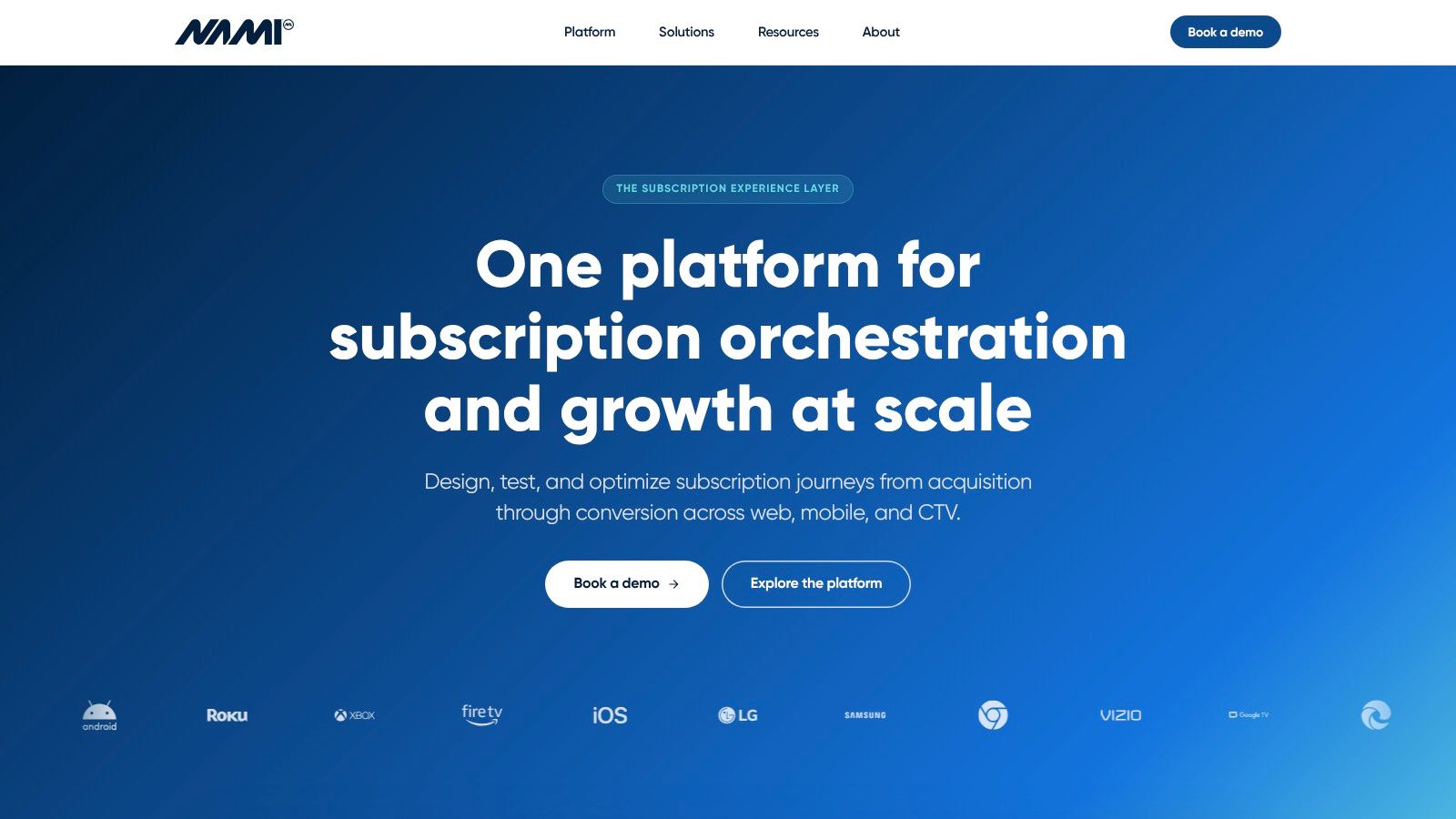
Nami ML is built for organizations that already know monetization is a multi-surface problem. Mobile, web, and connected TV teams often can't afford a fragmented stack where each surface has its own experiment logic and billing interpretation.
That's where Nami ML is strongest. It isn't trying to be the cheapest or simplest RevenueCat alternative. It's trying to be the orchestration layer for large subscription businesses with multiple stakeholders and multiple channels.
Enterprise fit
The attraction here is operational scale. No-code builders, multi-step flows, analytics integrations, SSO, audit logs, and service expectations all point toward larger organizations with governance requirements and cross-functional workflows.
Nami ML tends to be a fit when:
- You operate across surfaces: Mobile-only assumptions break down once web and CTV are part of the same subscriber journey.
- Several teams need access: Product, CRM, growth, finance, and engineering all touch the subscription system.
- Governance matters: Auditability and operational controls become procurement issues, not nice-to-haves.
This isn't ideal for a small app or early-stage game. The product is aimed at businesses that already have organizational complexity and enough subscriber scale to justify a coordinated monetization platform. If that's not you, the overhead will feel heavy fast.
Website: Nami ML
9. Superwall
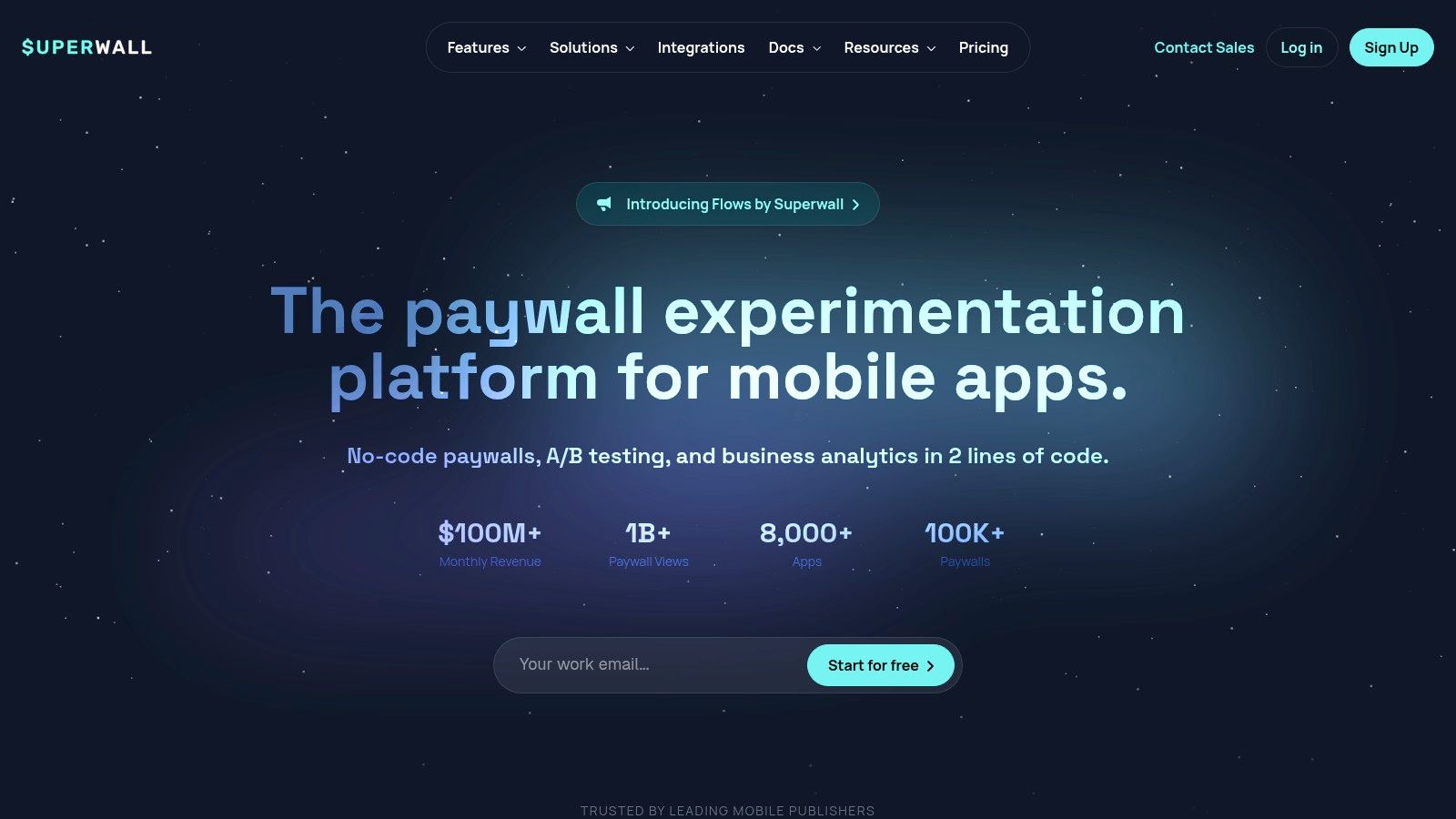
Superwall is excellent when your main problem is paywall velocity. Teams choose it because they want to launch, target, localize, and test paywalls quickly. If product and growth are driving monetization, Superwall feels closer to their daily workflow than a backend-heavy subscription tool.
That focus is both its strength and its limitation. It's one of the best tools in this list for rapid paywall operations, but you still need to think carefully about where entitlement truth lives and how the broader subscriber lifecycle is managed.
Where it wins
Superwall works well when you care about placements, audiences, surveys, localization, and campaign-style paywall management. It's very good at helping teams move faster without adding app releases to every monetization decision.
That's why it often gets compared not just with RevenueCat, but with broader monetization stacks. If your evaluation is specifically “paywall layer plus experimentation,” this breakdown of a Superwall alternative is useful for understanding where dedicated paywall tooling stops and full in-app journey tooling begins.
A few honest trade-offs:
- Pricing model: Monthly attributed revenue alignment can be appealing for early experimentation, but some teams eventually want flatter cost structure.
- Dependency stack: Superwall may still sit alongside store APIs or a separate entitlement layer depending on your setup.
- Scope boundary: It's great for paywalls. If you need onboarding, feature education, surveys, and retention journeys tied to entitlements, you may outgrow a paywall-first model.
Website: Superwall
10. Unity IAP
Unity IAP belongs on this list because many game teams don't need a full vendor-managed subscription stack on day one. They need a stable, engine-native purchasing layer that works well inside Unity and doesn't add another commercial dependency.
For that use case, Unity IAP is hard to ignore. It gives you unified purchase APIs for Apple and Google inside the engine environment your team already uses.
When Unity IAP is enough
If you're building exclusively in Unity and you have backend capability in-house, Unity IAP can be the most sensible RevenueCat alternative because it keeps core purchase handling close to the game codebase.
That tends to work when:
- You own backend logic: Your team can manage receipt validation, entitlement persistence, and restore handling yourself.
- You don't need growth tooling yet: Paywall experimentation, churn workflows, and advanced monetization analytics aren't immediate requirements.
- You want minimal vendor overhead: No third-party revenue share is an attractive property for games with technical confidence.
The trade-off is obvious and important. Unity IAP is a purchasing layer, not a full growth stack. You won't get out-of-the-box experimentation, analytics workspace, survey orchestration, or remote entitlement-aware flows. Once your game economy gets more complex, you may need to pair it with something broader.
Website: Unity IAP
Top 10 RevenueCat Alternatives, Quick Comparison
A quick comparison only helps if it reflects the actual decision teams face after launch. The question usually is not which tool can validate receipts. It is which one can connect purchase state to paywalls, onboarding, targeting, experiments, and retention work without turning every test into another engineering sprint.
The table below focuses on that broader growth-stack fit. The ratings are editor's assessments based on the criteria used throughout this article, including billing coverage, experimentation speed, analytics depth, and how easily billing data can drive the in-app experience.
| Product | Core features | UX & Performance | Value & Pricing | Target audience | Unique selling points |
|---|---|---|---|---|---|
| 🏆 Nuxie | AI screen generator; visual flow editor; analytics workspace; billing & entitlements | Editor's rating: Strong. Fast runtime, offline-first delivery, on-device targeting, built-in experiments | Free to start; Pro around consumer-app pricing levels; no revenue share | Small to mid-sized mobile apps and games; growth teams | AI-generated paywalls and onboarding, one-call SDK, one-tap publishing |
| Qonversion | Subscription infrastructure; paywall builder; analytics; A/B testing | Editor's rating: Strong. Real-time product variables and mature experimentation workflows | Usage-based or percentage-based pricing tied to tracked revenue | Cross-platform mobile teams; analytics-focused growth teams | Real-time product variables; broad SDK coverage |
| Adapty | No-code paywall builder; multivariate tests; LTV and cohort analysis; geo-pricing | Editor's rating: Strong. Marketer-friendly tooling and frequent product updates | Free tier, then percentage pricing after usage threshold; some add-ons cost extra | PMs and marketers running pricing and packaging tests | ASA and UA tooling; geo-pricing sync with app stores |
| Apphud | IAP infrastructure; receipt validation; paywall experiments; remote config | Editor's rating: Good. Useful lifecycle tools such as win-back flows and recovery workflows | Generous entry pricing; overage costs can matter on lower plans | Small teams that want turnkey growth and recovery tools | Figma-to-paywall workflow; win-back and refund handling |
| IAPHUB | Mobile SDKs; hosted Stripe checkout and portal; webhooks | Editor's rating: Good. Clear developer experience and fast web-to-mobile entitlement sync | Pro tier takes a percentage of monthly tracked revenue; advanced features on higher plans | Teams selling on web and mobile that need entitlement parity | Hosted Stripe billing with instant entitlement sync |
| Purchasely | No-code screen composer; A/B tests; entitlement mapping; multi-store support | Editor's rating: Strong. Good fit for teams that want non-developers to manage offer screens | Enterprise pricing, contact sales | Product and marketing teams; multi-store subscription businesses | Multi-store support; screen composer for non-developers |
| Glassfy | Open-source SDKs; real-time events; analytics; web billing support | Editor's rating: Good. Developer-friendly approach with lower lock-in concerns | Pricing typically handled through sales or community channels | Developers who want open SDKs and web payment flexibility | Open-source client SDKs; Stripe, Paddle, and app store support |
| Nami ML | No-code page and flow builder; multivariate experiments; analytics | Editor's rating: Strong. Built for enterprise controls such as SSO and audit logs | Enterprise-only custom contracts | Large organizations, OTT and media apps, high-volume subscriber businesses | Multi-surface orchestration across mobile, web, and CTV |
| Superwall | Visual paywall editor; audience targeting; campaigns; localization | Editor's rating: Strong. Fast iteration for PMs and strong paywall testing workflows | Pricing aligned to monitored app revenue on paid plans | Growth teams focused on paywall and offer testing | Revenue-aligned pricing; refund protection; AI demand scoring |
| Unity IAP | Engine-native purchase APIs; receipt and entitlement handling support | Editor's rating: Good for engine-native purchase handling, limited for growth workflows | Included with Unity; no third-party revenue share | Unity game developers who want native IAP | Tight Unity integration; no external revenue share |
A few patterns matter more than the feature checklist suggests.
If the bottleneck is shipping and iterating monetization UX fast, Nuxie, Adapty, Purchasely, and Superwall stand out because they reduce the gap between billing data and what the user sees in the app. If the bottleneck is subscription infrastructure and analytics depth, Qonversion and Apphud usually deserve a closer look. If web billing parity matters, IAPHUB, Glassfy, and Nami ML are more relevant than a mobile-only comparison would suggest.
That distinction matters in practice. A team can be fully satisfied with receipt validation and still lose weeks every quarter because onboarding, paywalls, win-back flows, and entitlement-aware screens live in separate systems. The better RevenueCat alternatives are the ones that shorten that loop.
How to Choose and Migrate to a New Platform
The right RevenueCat alternative depends less on feature checklists and more on where your bottleneck is. If you're an indie team that mainly wants lower-friction subscription ops, Apphud and IAPHUB are practical places to start. If your growth team keeps asking for faster paywall and lifecycle experimentation, Superwall, Adapty, Qonversion, and Nuxie are more relevant. If you run a larger multi-surface subscription business, Nami ML, Chargebee, or a hybrid architecture may make more sense than a mobile-only decision.
One pattern shows up repeatedly in this category. Teams don't leave RevenueCat only because of pricing. They also leave because they want more analytics granularity, more experimentation control, or a stack that connects monetization data to the actual user journey. Comparison data from Apphud and Adapty highlights this split clearly, with alternatives increasingly differentiated by analytics depth, targeting, real-time reporting, and paywall control rather than simple receipt handling alone.
The migration itself should be boring. If it feels exciting, something is probably under-scoped. Start by mapping every entitlement, product ID, restore path, webhook dependency, analytics event, and downstream integration that currently depends on RevenueCat or your existing billing layer.
A safe rollout usually follows this order:
- Backfill what you can: Historical purchase and subscriber state matters for cohorts, targeting, and lifecycle messaging.
- Run systems in parallel: Put the new SDK in a development build first, then test a limited production segment before broad rollout.
- Verify edge cases early: Restores, refunds, trial transitions, lapsed reactivation, family sharing behavior, and account switching are where migrations break trust.
- Separate migration goals: First replicate entitlement correctness. Then enable new growth workflows like remote paywalls, onboarding branches, or churn-save campaigns.
Operator advice: Don't judge a migration by dashboard parity alone. Judge it by whether subscribers keep access correctly and whether your team can ship monetization changes faster after the move.
The most important metrics during migration are qualitative in framing even when your internal dashboards are numeric. Watch entitlement accuracy, restore purchase success, trial start conversion, purchase conversion, churn-save performance, and how much engineering time disappears once paywalls, onboarding, and surveys move out of release cycles.
Unlike many alternatives in the list, Nuxie can sit alongside an existing billing provider or replace one, but the bigger value is that entitlement state becomes directly usable inside remotely published onboarding, survey, paywall, and campaign flows. That changes what migration success looks like. You're not only proving that purchases still work. You're proving that your team can finally act on monetization insight inside the same system where it designs and ships the in-app experience.
If your team is evaluating a RevenueCat alternative because billing works but growth iteration doesn't, Nuxie is worth piloting. It gives mobile apps and games a provider-agnostic way to connect billing, entitlements, analytics, experimentation, onboarding, paywalls, surveys, campaigns, and personalized in-app flows across iOS, Android, React Native, Flutter, Unity, and Unreal, without taking a revenue-share fee on billing and entitlement data.