
Best Adapty Alternative: A 2026 Platform Comparison
Looking for an Adapty alternative? Compare top platforms for mobile subscription billing, paywalls, experiments, and growth. In-depth review for 2026.
Your team probably didn't start looking for an Adapty alternative because paywalls stopped mattering. You started looking because paywalls became only one part of a much bigger delivery problem. The hard part now isn't just showing a purchase screen. It's coordinating onboarding questions, offer eligibility, entitlement-aware screens, retention prompts, surveys, and experiments across multiple client stacks without creating release chaos.
That's the ceiling many teams hit with a paywall-centric setup. Product wants to test a different onboarding path. Growth wants to personalize the value prop before the paywall. Engineering wants fewer one-off remote config rules glued together across iOS, Android, React Native, Flutter, and game clients. Finance wants reliable entitlement and purchase state. Everyone wants rollback options when a bad flow ships.
Adapty is a serious product. Its own comparison page says it's trusted by 20,000+ apps generating $3.1B+ in revenue, and that page also highlights breadth that matters when evaluating alternatives, including AI-powered predictive analytics, a paywall builder, unlimited A/B tests, and advanced targeting. That's a strong baseline. But the key question for many teams isn't whether Adapty can optimize a paywall. It's whether your next platform can orchestrate the whole in-app journey around monetization.
That broader need is getting easier to justify. Grand View Research estimates the global alternative data market at USD 11.65 billion in 2024, with a projection to reach USD 135.72 billion by 2030 at a 63.4% CAGR from 2025 to 2030. For mobile teams, that shows how much decision-support and analytics tooling is expanding beyond narrow, single-surface products.
The market language is still messy. Existing comparison pages often reduce the category to paywalls, subscription analytics, and A/B tests, while many buyers need a broader runtime for onboarding, offers, liveops, and experimentation. If that sounds like your situation, the right Adapty alternative isn't the tool with the prettiest paywall editor. It's the one that fits your architecture, release process, and growth workflow.
1. Nuxie

Nuxie makes the most sense when you've outgrown the idea that monetization lives on one screen. It's built for connected journeys. That means onboarding questions, branching logic, personalized value screens, paywalls, surveys, retention offers, liveops moments, experiments, analytics, and entitlements can sit in one workflow instead of being scattered across separate tools and custom client logic.
That changes who can ship what. After the SDK is integrated, teams can edit screens, copy, questions, paywall variants, targeting, and experiment logic in the editor instead of routing every change through an app release. For product and growth teams, that's where the operational gain usually shows up. Not in vague “AI efficiency” talk, but in fewer engineering tickets, faster launch cycles, and cleaner rollback when a variant underperforms.
Why it feels different from a paywall tool
Nuxie's strongest angle is the collaborative flow editor and runtime model. The product is designed around journeys, not isolated monetization surfaces. That's a better fit for apps and games where conversion depends on what happens before and after the transaction screen.
It also matters that Nuxie is cross-platform in a practical way. It supports iOS, Android, React Native, Flutter, Unity, Unreal, and Godot, which is a real advantage if your growth team doesn't want separate implementation patterns for each client. The provider-agnostic stance also helps. You can use its billing and entitlement layer, or keep parts of your existing stack and evolve gradually.
Practical rule: If your monetization spec includes words like “if answered X, then show Y, unless entitled, unless campaign Z is active,” you're no longer shopping for a paywall builder. You're shopping for a runtime.
A second point in Nuxie's favor is commercial model flexibility. It includes billing, subscription sync, purchase data, and entitlement infrastructure, but it isn't positioned as a revenue-share tax on your billing data. That matters once your finance team starts modeling what vendor costs look like after you scale.
Where Nuxie works best
The sweet spot is a team that wants remote UI plus orchestration. Media subscriptions, habit apps, utilities, and game teams can all use it, but the common pattern is the same: they want to ship more of the journey without waiting on store releases.
A few practical strengths stand out:
- Connected flows: Build onboarding, quizzes, paywalls, upgrades, and retention experiences in one editor instead of stitching together remote config and custom screens.
- Cross-platform delivery: Keep journey logic aligned across native mobile and game engines instead of recreating the same experiments multiple times.
- Provider-agnostic monetization: Use Nuxie alongside existing providers or replace parts of the stack when it makes sense.
- Operational speed: Measure release-cycle savings by tracking engineering tickets avoided, time to launch, and rollback speed.
The trade-off is straightforward. If you only need subscription plumbing and a simple paywall layer, Nuxie may be more platform than you need. And if your live economy or commerce rules are highly custom, you'll still want engineering involved in the integration and backend fit.
For teams exploring richer remote journey control, Nuxie's own overview of a mobile in-app flow builder is the right place to evaluate how the editor and runtime map to your release process. The product itself is at Nuxie.
2. RevenueCat
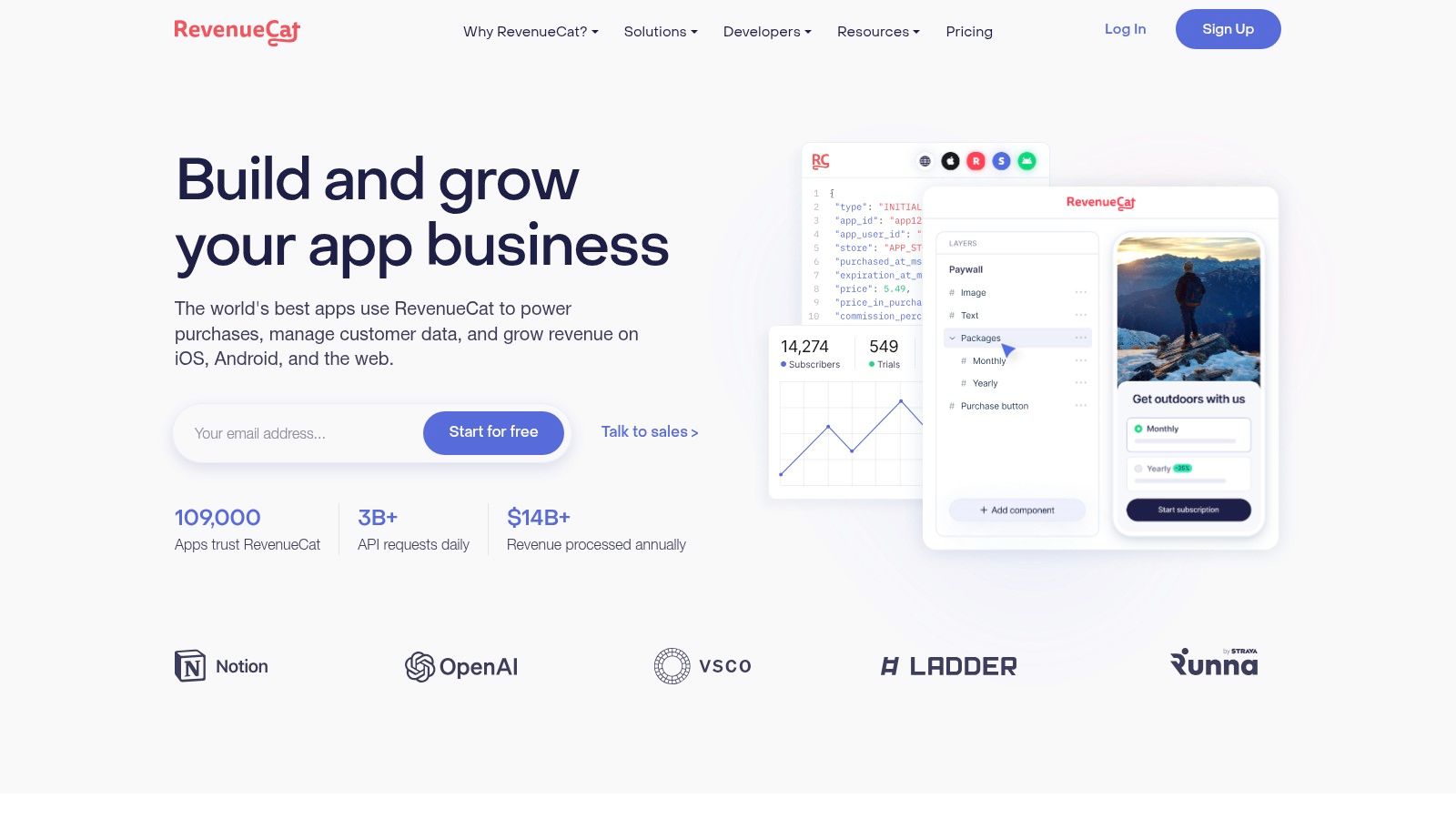
RevenueCat is the safe recommendation when your first priority is subscription infrastructure that most mobile engineers already understand. Its core appeal is predictable plumbing. Purchases, entitlements, receipt handling, customer state, webhooks, and integrations are mature enough that teams can move quickly without building a billing backend from scratch.
That matters because reliability often beats novelty in monetization infrastructure. If your team is small, or if mobile revenue is meaningful enough that you can't tolerate edge-case entitlement mistakes, RevenueCat remains one of the easiest platforms to justify internally. Docs are strong, integration patterns are familiar, and most engineering teams can reason about the implementation quickly.
Best fit and trade-offs
RevenueCat is strongest when you want a default foundation and you're comfortable composing the rest of your growth stack around it. That can include analytics tools, CRM, experimentation platforms, and remote UI products. It's less opinionated than some end-to-end growth suites, which can be a benefit or a limitation depending on how your org works.
If you're replacing Adapty specifically, the key question is whether you want more than billing and paywall support. RevenueCat has grown its growth tooling, but many teams still pair it with other products to handle richer journey orchestration. That's fine if your architecture is modular and your team can manage those seams.
RevenueCat is usually the right choice when the problem is “make subscriptions reliable across platforms,” not “let growth own the full user journey.”
A few patterns I'd use to decide:
- Choose RevenueCat if: billing correctness, entitlement sync, and ecosystem integrations matter more than advanced remote journey design.
- Be cautious if: your roadmap requires onboarding flows, branching offers, or entitlement-aware screens managed by non-engineers.
- Plan for composition: you may still need another layer for in-app experience orchestration if paywalls aren't the only growth surface.
Teams comparing infrastructure-first products to broader experience platforms should think carefully about ownership boundaries. This becomes clearer when you compare a billing backend to a full in-app experience platform for mobile growth teams. RevenueCat itself is at RevenueCat.
3. Qonversion
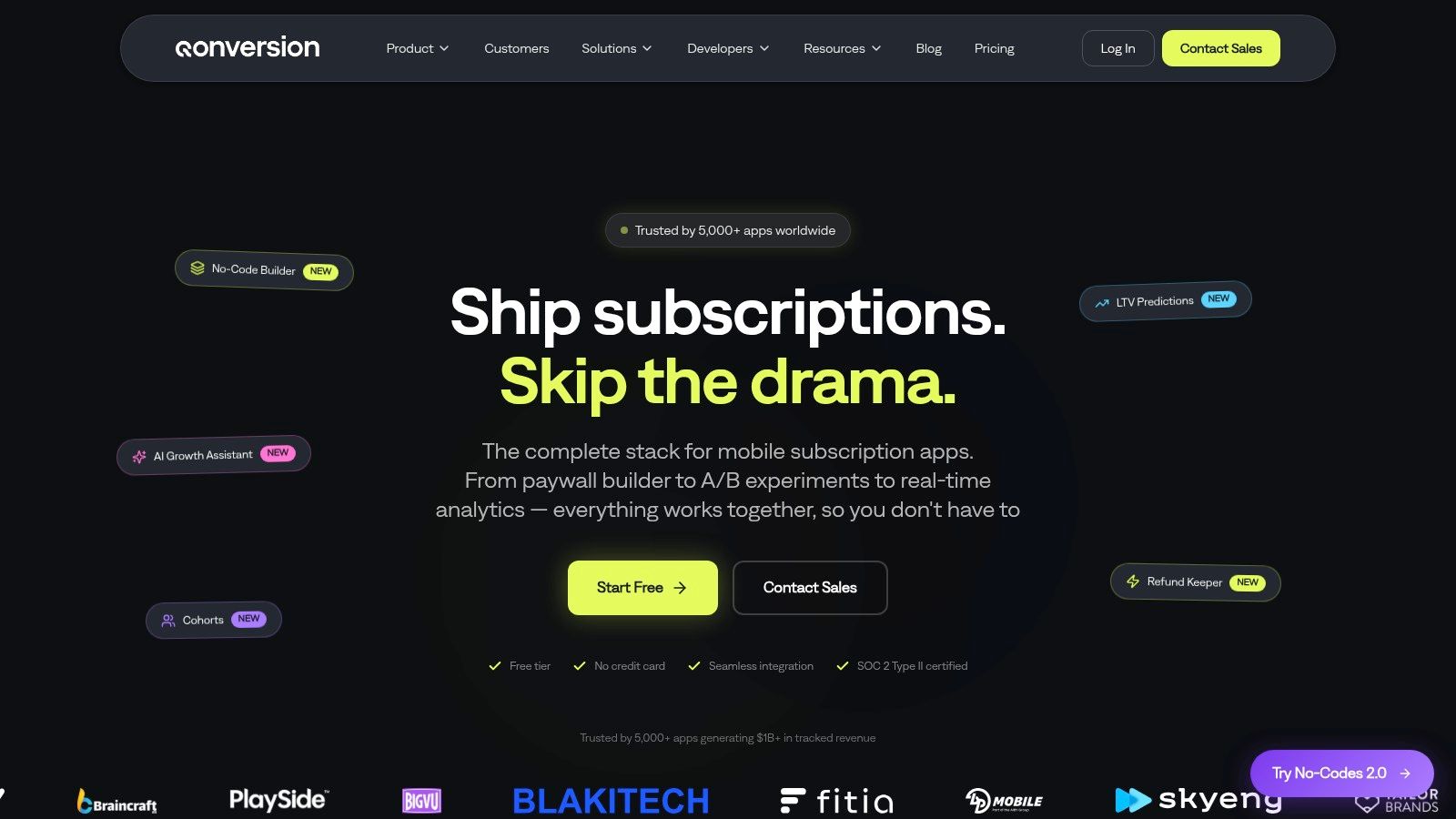
A common mobile growth problem looks like this. The team can change the paywall fast, but onboarding logic, offer timing, and retention messaging still live in separate tools and release cycles. Qonversion improves that setup if your main bottleneck sits close to subscriptions, because it ties paywalls, purchase data, analytics, and monetization experiments together better than a pure billing layer.
That makes it a credible Adapty alternative for apps that still want a subscription growth product, not just receipt handling and entitlement plumbing. The product is opinionated in a useful way. You get more structure around monetization decisions, and less custom stitching between experiment results, revenue events, and subscription reporting.
Strong around monetization workflows, narrower around the full journey
Qonversion works best for teams optimizing the commercial path around the purchase moment. That includes paywall targeting, pricing tests, offer logic, and revenue analysis in one system. If your team is actively running mobile paywall A/B tests, that tighter loop can reduce operational drag.
I like it most for subscription-first apps where growth and product care about revenue outcomes, not just screen-level conversion. You can get to answers faster because the experiment layer stays close to the subscription data model. Smaller teams usually benefit from that. There are fewer integration seams to maintain, and fewer dashboards to reconcile during weekly reviews.
The limitation is the same thing that makes the product focused. Qonversion is centered on subscription growth, not broad in-app journey orchestration. If your roadmap includes branching onboarding flows, entitlement-aware content outside the paywall, win-back experiences, or lifecycle touchpoints managed by non-engineers, you may hit the edge of what it wants to be.
That distinction matters. A paywall stack can improve monetization screens. A connected journey platform changes how the user moves from first open to activation, purchase, renewal, and retention.
My read:
- Best fit: subscription apps that want experiments, analytics, and monetization logic tightly connected.
- Weaker fit: teams that need onboarding, in-app messaging, and retention flows to be managed as one continuous system.
- Questions to test in trial: how deep the event model goes, how flexible the audience logic is, and how much targeting still requires engineering support.
Qonversion sits in a useful middle tier. More growth-oriented than infrastructure-first products. More constrained than platforms built to orchestrate the whole in-app journey. For teams whose revenue strategy still revolves around optimizing subscription moments, that can be the right trade-off. The website is Qonversion.
4. Superwall
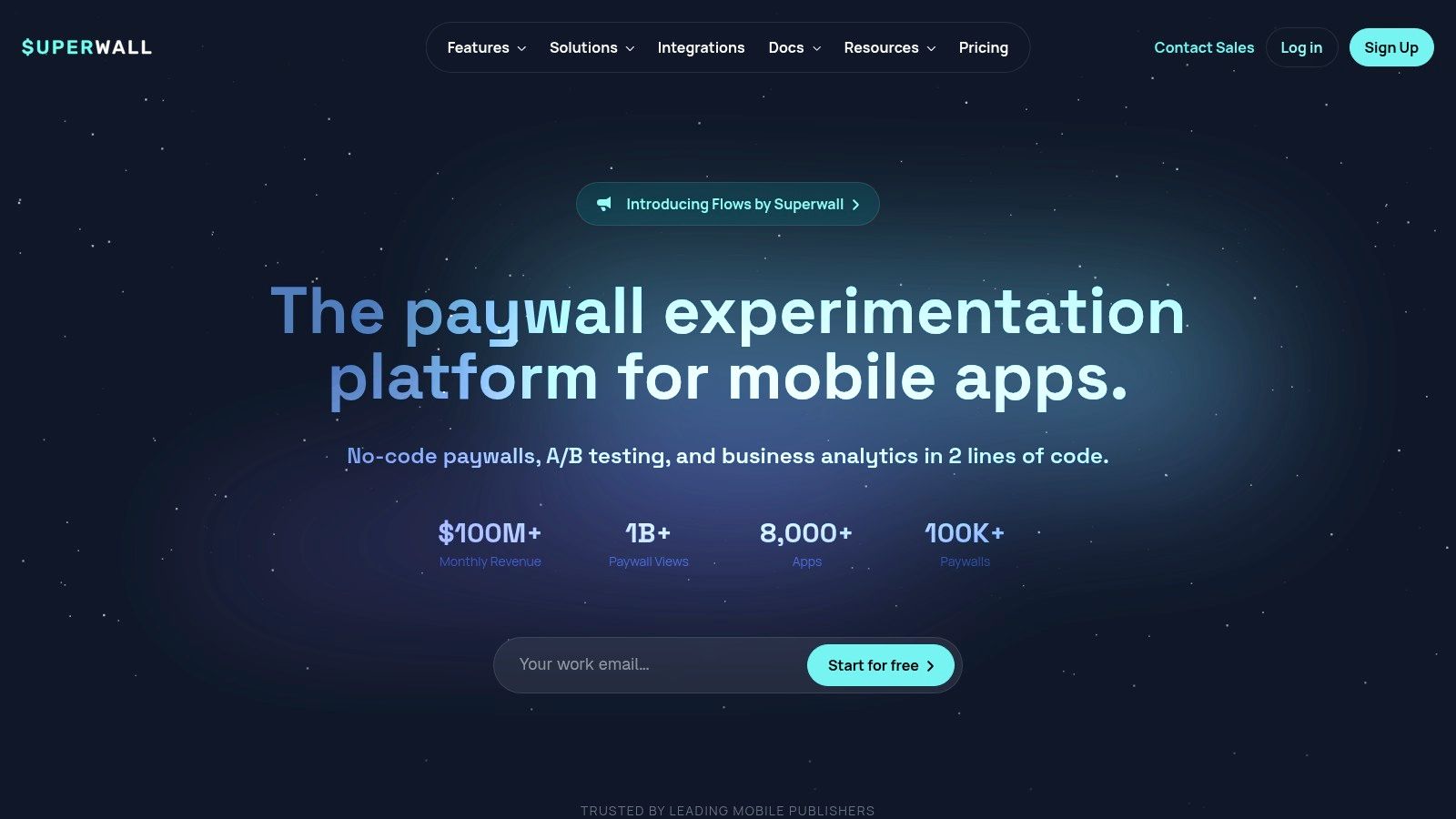
Superwall is what I'd recommend when the team is very clear about the problem: “We need to ship and test paywalls quickly, and we're fine pairing that with a separate receipt and entitlement system.” It's a paywall-first product, and that focus is a strength. The editor, triggering model, audience logic, and experimentation workflow are all designed to reduce release friction around monetization screens.
That product boundary is important. Superwall doesn't try to be the entire monetization stack. In many orgs, that makes adoption easier because engineering can keep billing and entitlements where they already live while growth iterates on presentation and timing.
Fast where it matters, narrow where it matters
If your team already has RevenueCat, native StoreKit, Google Play Billing, or another backend in place, Superwall can be a good acceleration layer. It's especially useful when marketers or product managers need faster paywall iteration without waiting for engineering to wire every text, layout, or audience change.
The weakness is that it stays centered on the paywall surface. You can stretch that with campaigns, surveys, and triggers, but it still isn't the same as a connected journey builder covering onboarding through retention. If your current frustration with Adapty is that monetization is too isolated from the rest of the experience, Superwall may solve speed without solving the bigger workflow issue.
A strong paywall tool can still leave you with fragmented onboarding, fragmented targeting, and fragmented experiment ownership.
That's why I'd separate two use cases:
- Use Superwall when: the core bottleneck is paywall iteration speed.
- Avoid forcing it when: your product team wants branching flows and entitlement-aware journeys outside the purchase screen.
- Expect to pair it: budget for a separate subscription backend and decide clearly which team owns audience logic versus entitlement logic.
If your team is benchmarking paywall tooling specifically, Nuxie's take on mobile paywall A/B testing is a useful contrast because it frames paywalls as one step inside a larger in-app flow. Superwall itself is at Superwall.
5. Purchasely
Purchasely is a sensible Adapty alternative for teams that want monetization tooling and a strong console experience, but also care about operational clarity. It has a polished no-code paywall builder, remote deployment model, and the kind of documentation posture that tends to matter in larger companies where legal, data, and procurement reviews slow everything down.
That doesn't make it boring. It's still built for mobile monetization teams that need to ship. But Purchasely feels more structured than some startup-forward tools, which can be a plus if your org needs clean ownership, approvals, and compliance conversations.
Good for teams that need order, not just speed
I'd look closely at Purchasely if your current stack is creating friction between product, engineering, and ops. The product supports remote paywall management and experimentation, but its primary benefit is often process control. Templates, metadata, and clearer documentation reduce the number of “wait, where is that configured?” moments that plague monetization setups after they've grown for a while.
This is also one of the better fits for teams that want design and billing considerations handled in one environment instead of assembling several lightweight tools. That said, it's still more monetization suite than full journey orchestration platform.
The main trade-offs are ecosystem size and evaluation friction. Community content isn't as broad as the biggest names, and pricing often requires a sales conversation. That's not necessarily bad, but it means you should run a real proof-of-concept with your own targeting and flow requirements before committing.
A practical way to assess Purchasely is to test three things in trial:
- Editor control: can non-engineers make the changes they need?
- Runtime fit: how well does it handle your app structure and localization needs?
- Data handoff: can your analytics and growth stack consume the right events without custom cleanup?
For monetization teams that want a more managed, enterprise-friendly environment, Purchasely is a strong candidate. The website is Purchasely.
6. Apphud
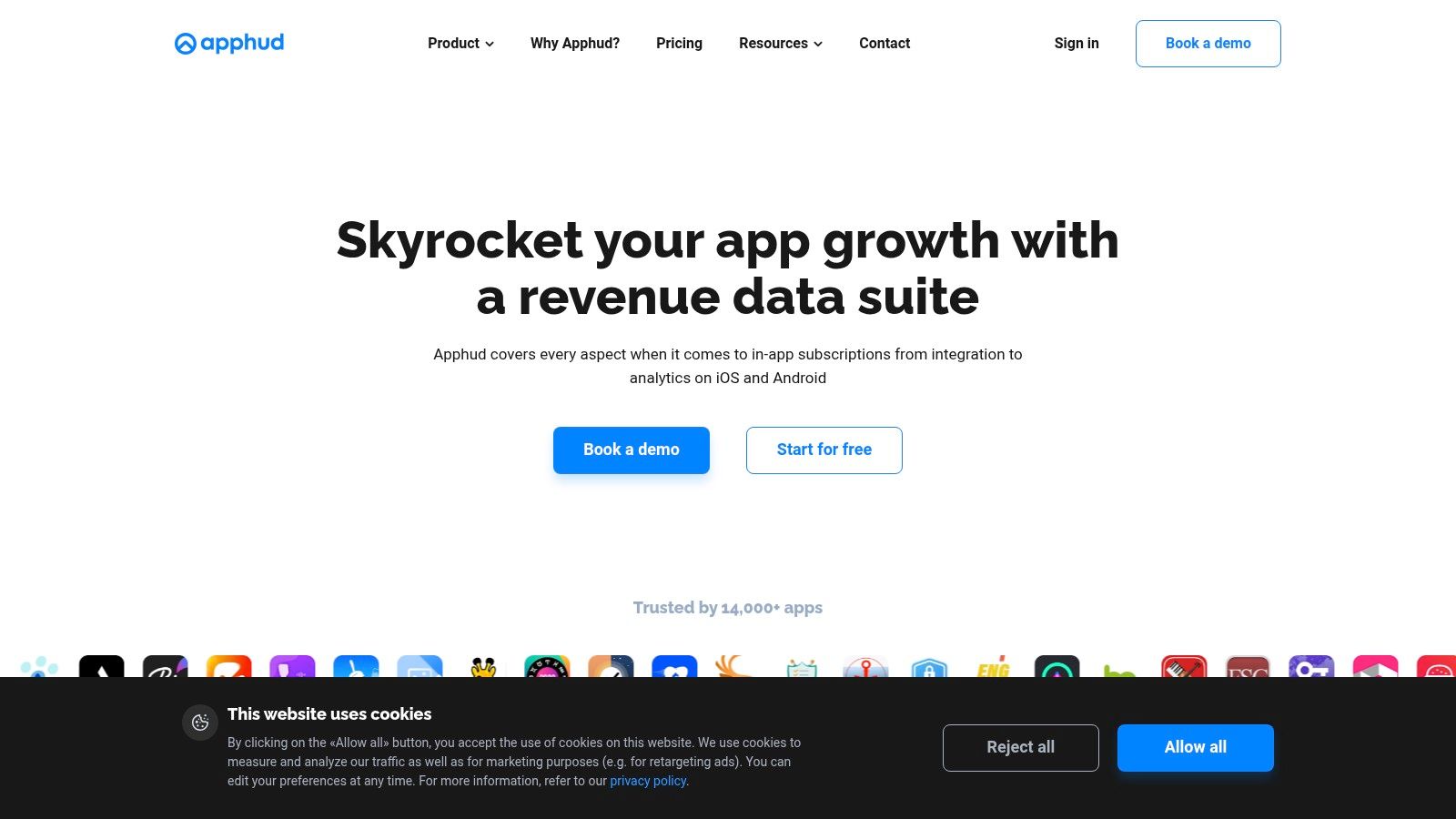
A common Apphud evaluation starts the same way. The team wants more control over paywalls, faster experiments, and cleaner subscription reporting, but they are not trying to rebuild onboarding, messaging, and retention flows in one system.
Apphud fits that brief well. It gives teams a focused monetization stack: remote paywalls, placements, A/B tests, and subscription analytics tied closely to purchases and entitlements. That makes it easier to improve conversion mechanics without forcing a larger product architecture decision.
That focus is also the main limitation.
If your goal is to optimize the full user journey, from onboarding path to offer timing to post-purchase retention, Apphud can start to feel narrow. It is strongest at the transaction layer and the events immediately around it. Teams looking for a connected journey orchestration platform will usually need other tools to manage upstream education, segmentation, and lifecycle logic.
Why some teams prefer it
Apphud is a sensible choice for teams that want monetization data and experiment controls in the same place, with less overhead than a broader platform. I've seen it work best when the growth model is straightforward: drive users to a small number of purchase moments, test pricing or presentation, and measure subscription outcomes without building a complex orchestration stack around it.
That can be a real advantage. A narrower product often means faster setup, fewer internal owners, and less ambiguity about where paywall logic lives.
The trade-off shows up later, once growth work moves beyond the paywall itself. If the roadmap includes adaptive onboarding, personalized education flows, or retention experiences that respond to subscription state in real time, Apphud usually becomes one part of the system rather than the system itself.
A practical evaluation should focus on three questions:
- Monetization depth: does it give product and growth teams enough control over offers, placements, and test setup?
- Data usability: can analysts answer conversion and revenue questions without heavy event cleanup downstream?
- Journey coverage: how much of the user flow lives inside Apphud, and how much still depends on separate tools or engineering work?
Apphud is a good Adapty alternative for teams that want to sharpen subscription execution without buying into a broader experience platform. If you need connected orchestration across onboarding, conversion, and retention, it is more likely to complement that stack than replace it. The website is Apphud.
7. Nami ML
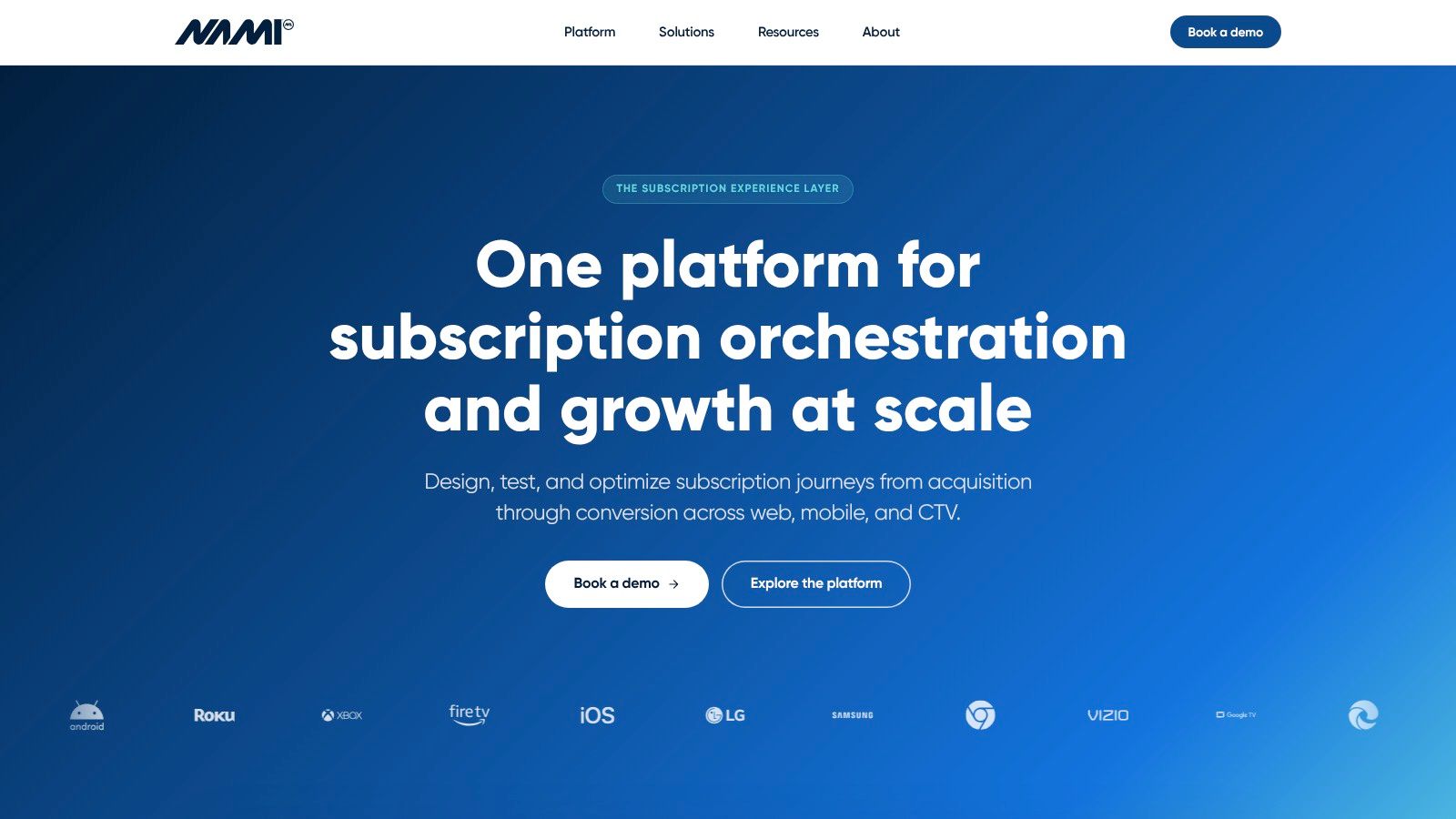
Nami ML is one of the more interesting options if your problem extends beyond mobile app subscriptions into web or connected TV surfaces. It's built for orchestration across multiple endpoints, which makes it more relevant for media, streaming, and larger subscription businesses than for a single mobile app trying to improve one paywall.
That broader scope is both the value and the cost. You get a platform that can handle coordinated flows and experiments across surfaces, but you also inherit a heavier evaluation process and a product that may be more than a small app needs.
Best for cross-surface subscription businesses
If your users start on web, restore on mobile, and convert again through lifecycle campaigns, Nami ML is worth attention. The product is better aligned to that complexity than many mobile-only alternatives. Teams with SSO requirements, audit expectations, or more formal data pipeline needs will also appreciate the enterprise orientation.
Where I'd be cautious is with smaller app teams that really just need better monetization shipping velocity. In that case, Nami ML can feel like adopting enterprise architecture for a problem that's still mostly tactical. You'll spend time evaluating capabilities you may never use.
A simple way to decide is to ask whether your revenue journey already spans multiple surfaces operationally, not just theoretically. If it does, Nami ML deserves a serious look. If not, a lighter mobile-first tool or a connected in-app runtime may be a better fit.
Cross-surface monetization sounds strategic until you realize you need three teams to operate it. Buy that complexity only if your business already has it.
For larger organizations with multi-endpoint subscription flows, Nami ML is more relevant than many Adapty comparison pages suggest. The website is Nami ML.
8. Appflow.ai
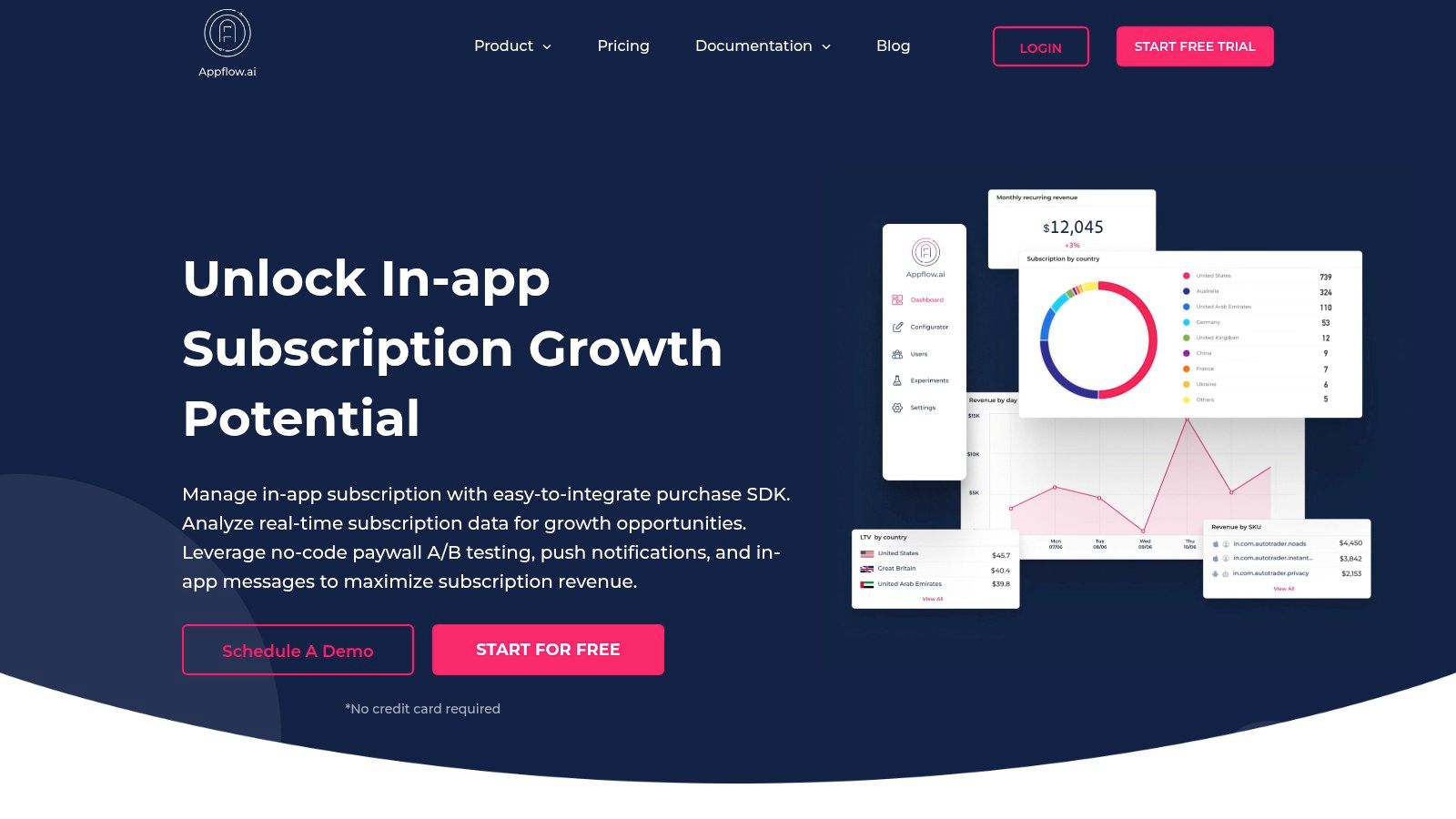
Appflow.ai is geared toward growth teams that want to move quickly on pricing and paywall experiments with built-in analytics and subscriber views. It's less famous than some of the incumbents, but that doesn't automatically make it a weaker option. Sometimes it means the product is focused on a narrower buyer with a more specific workflow.
That workflow is usually direct-response style subscription optimization. Segment users, test pricing or messaging, review subscriber-level behavior, and iterate. If that's the game you're playing, Appflow.ai can be a solid Adapty alternative.
The appeal and the caution
The appeal is speed around monetization experiments. Teams that care more about running tests than building a long-term composable architecture may find that refreshing. The product looks most attractive when you want quick setup and easy control over pricing and paywall variation.
The caution is fit at the SDK and support level. With smaller platforms, I always tell teams to test the edges early: platform coverage, restore flows, sandbox behavior, event exports, and how quickly support answers implementation questions. The commercial and operational experience matters almost as much as the feature list.
I'd evaluate Appflow.ai through a narrow pilot. Pick one paywall, one price test, one audience split, and one downstream analytics use case. If those work cleanly, the platform becomes much easier to trust.
A good fit usually looks like this:
- Growth-led app teams: fast iteration on pricing and paywall messaging.
- Not ideal for: complex entitlement systems or broad remote journey orchestration.
- Most important trial criteria: SDK stability, event fidelity, and support responsiveness.
Appflow.ai won't replace a full connected experience platform, but it can still be the right tool for focused monetization testing. The website is Appflow.ai.
9. IAPHUB
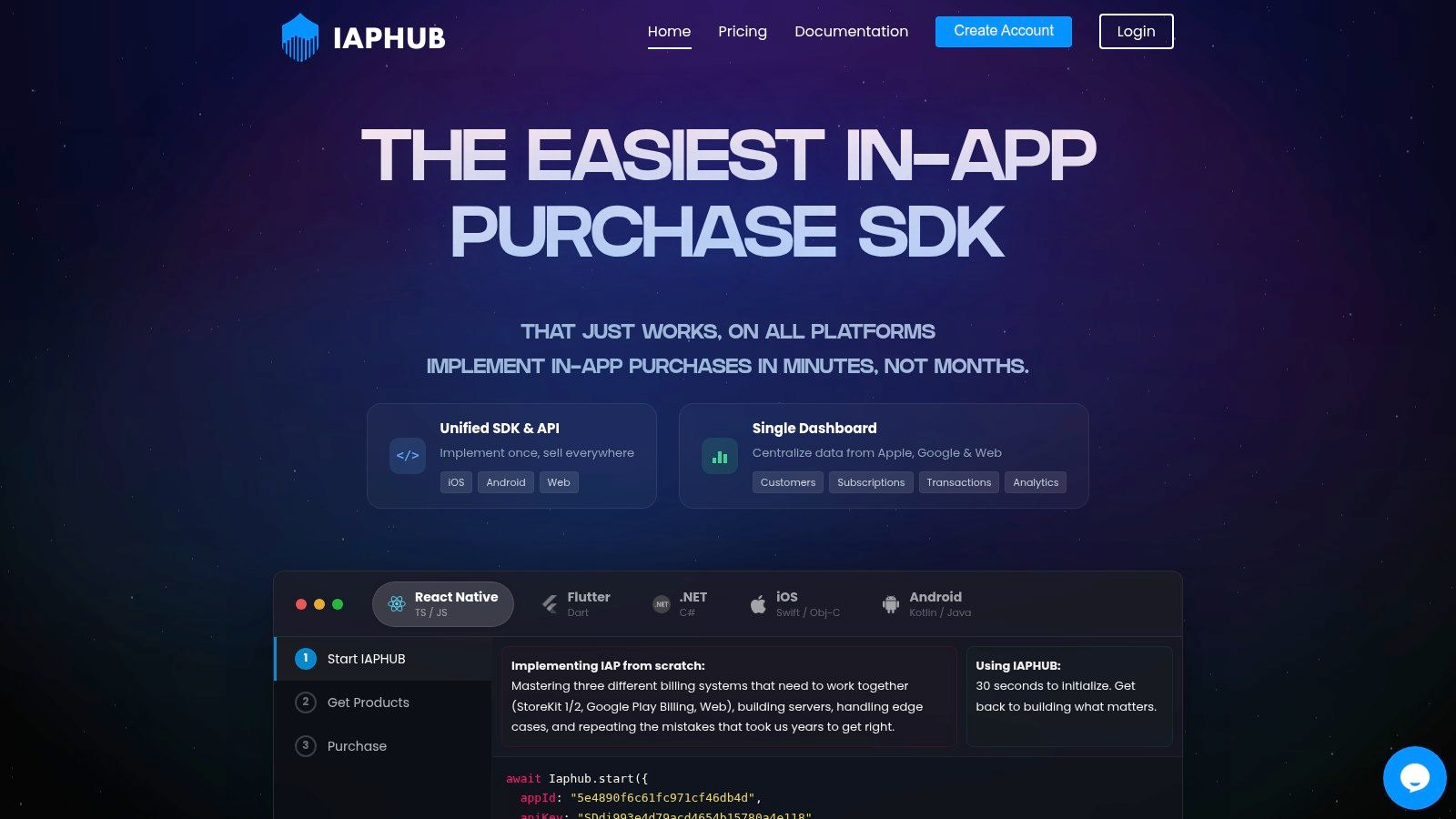
IAPHUB is the lean option in this list. It's for teams that don't want a large growth suite and don't mind assembling some pieces themselves. You get in-app purchase management, receipt validation, subscriber sync, a basic paywall component, and APIs or webhooks to connect the rest.
That can be a smart choice. Not every app needs a monetization command center. Some teams are happier with a smaller IAP layer plus their own analytics and experimentation tooling, especially if they want more control over data flow and vendor lock-in.
When lightweight is the right answer
IAPHUB is useful when your engineering team prefers modular stacks and your product team isn't demanding a rich no-code journey builder. It can also be attractive for cost-conscious teams that want to avoid paying for features they won't use.
The limitation is obvious. You won't get the same experimentation depth or orchestration range that you'd get from platforms centered on paywalls or connected user flows. That means more responsibility lands on your team to design, instrument, and analyze growth work.
If you're considering IAPHUB, be honest about your operating model:
- Choose it if: you want reliable purchase infrastructure and are comfortable wiring analytics yourself.
- Skip it if: product or growth expects remote iteration across onboarding, offers, and retention without engineering help.
- Plan ahead: define your event taxonomy and entitlement logic early, because the platform won't hide those decisions for you.
IAPHUB is a good reminder that an Adapty alternative doesn't always need to be bigger. Sometimes the right move is going smaller and keeping the stack modular. The website is IAPHUB.
Top 9 Adapty Alternatives: Features & Pricing
| Product | Core offering | Key highlights (✨) | UX / Quality (★) | Value & Pricing (💰) | Target audience (👥) |
|---|---|---|---|---|---|
| Nuxie 🏆 | AI-native growth platform + billing & entitlements (no rev-share) | ✨ Visual flow editor, AI growth agent, analytics workspace, sub-50ms runtime, on-device targeting, Rive animations | ★★★★★ Instant screens, offline-ready, one-tap publish | 💰 Pro ~$9.99/mo (illustrative); enterprise/usage plans; no revenue-share fee | 👥 Product, growth & engineering teams for apps & games |
| RevenueCat | Subscription infrastructure & entitlements | ✨ Unified customer model, Growth Tools (paywalls/tests), wide integrations | ★★★★☆ Stable SDKs, mature docs | 💰 Generous free tier; usage-based fees at scale | 👥 Teams wanting predictable, integrations-first subscription plumbing |
| Qonversion | Subscription growth + real-time analytics | ✨ Paywall builder, revenue-focused A/B tests, attribution | ★★★★☆ Fast experiment velocity, real-time metrics | 💰 Competitive, transparent tiers (some sales contact) | 👥 Growth teams focused on pricing & revenue experiments |
| Superwall | Paywall-first remote configuration & testing | ✨ No-code paywall editor, audiences, multivariate tests | ★★★★☆ Very fast paywall iteration without releases | 💰 Revenue-linked pricing (MAR); pairs with subscription backends | 👥 Teams prioritizing rapid paywall optimization |
| Purchasely | Full-stack monetization & compliance-focused console | ✨ No-code paywalls, multi-store support, templates, compliance docs | ★★★★☆ Strong editor for non-engineers; enterprise-ready | 💰 Sales-led for larger tiers; quick-start templates | 👥 Enterprises or regulated apps needing billing + design in one |
| Apphud | Subscription infra with experiments & placements | ✨ Remote JSON paywalls, experiment analytics, placements | ★★★★☆ Practical testing & revenue cohort insights | 💰 Public pricing limited; confirm tiers with vendor | 👥 Teams wanting A/B testing tightly tied to entitlements |
| Nami ML | Enterprise subscription orchestration across surfaces | ✨ Cross-surface flows (mobile, web, CTV), SSO, audit logs | ★★★★☆ Enterprise-grade reliability & controls | 💰 Quote-based, enterprise pricing | 👥 Large orgs coordinating journeys across multiple surfaces |
| Appflow.ai | Subscription analytics, CRM & price A/B testing | ✨ No-code price/paywall tests, subscriber CRM, dashboards | ★★★☆☆ Good for price experiments; smaller footprint | 💰 Freemium/trial options; usage-sensitive plans | 👥 Growth teams focused on pricing & segmentation testing |
| IAPHUB | Lightweight IAP management & receipt validation | ✨ Server-side receipt validation, subscriber sync, basic paywall | ★★★☆☆ Simple, modular SDK for entry-level use | 💰 Clear entry-level pricing; sandbox/test options | 👥 Small teams preferring modular stacks and DIY analytics |
The Right Tool for the Job and the Case for Nuxie
The wrong way to choose an Adapty alternative is to compare feature grids line by line and pick the tool with the longest checklist. That's how teams end up with great paywall editors, solid receipt handling, and a messy user journey that still requires engineering to ship every meaningful experiment. The better question is simpler. Where does your monetization logic live today, and who needs to change it next week?
If you're a subscription-first app that mostly needs dependable billing infrastructure, RevenueCat is still one of the easiest tools to defend. If your main pain is paywall iteration speed, Superwall is a focused answer. If you want a subscription-growth platform with strong monetization testing close to revenue data, Qonversion and Apphud are both worth serious evaluation. If your organization has larger compliance or cross-surface requirements, Purchasely and Nami ML start to look more attractive.
But a lot of teams searching for an Adapty alternative are really dealing with something broader. They don't need another isolated subscription SDK. They need to manage the whole path from first session to conversion and retention. They need onboarding questions that feed targeting. They need branching flows based on answers, attribution, device state, and entitlement state. They need to test value props before the paywall, not just button colors on it. They need to ship all of that without queueing another mobile release.
That's the gap many comparison pages miss. The category still talks as if monetization starts when the paywall appears. In practice, monetization often starts with the first screen, the first question, the first segmented offer, or the first liveops moment that reframes value for the user. If your tooling doesn't reflect that, your team ends up building the missing workflow in glue code, remote config hacks, and dashboards nobody fully trusts.
That's why Nuxie stands out in this list. It treats growth as a connected system. The flow editor is the key idea. Product, growth, and engineering can work inside one runtime for onboarding, personalization, paywalls, offers, surveys, entitlement-aware paths, and campaign analytics instead of managing each surface in a separate product. For teams that have outgrown a paywall-focused workflow, that's a meaningful architectural difference.
I also think Nuxie gets the economics right for modern mobile teams. It's provider-agnostic, so adopting it doesn't force a hard rip-and-replace mindset on day one. It can work alongside existing tools while you migrate the pieces that need to change. And its billing and entitlement capabilities are positioned without a revenue-share fee, which is an important detail once your finance team starts asking whether your growth tooling cost should scale like a tax.
The honest recommendation is this. Don't buy a platform because it promises “all-in-one growth.” Buy it because it matches the way your team ships. If engineering owns everything and wants a narrow, stable subscription backend, choose the strongest infrastructure product. If growth needs to control the full in-app journey without waiting for store releases, choose a platform built around journeys. For that second group, Nuxie is the most compelling option here.
If your team has outgrown isolated paywall workflows and wants to remotely ship connected onboarding, monetization, entitlement, and retention journeys across mobile apps or games, take a close look at Nuxie. It's a strong fit for teams that want one runtime for the full in-app experience, not just the transaction screen.